Context
meaning.love
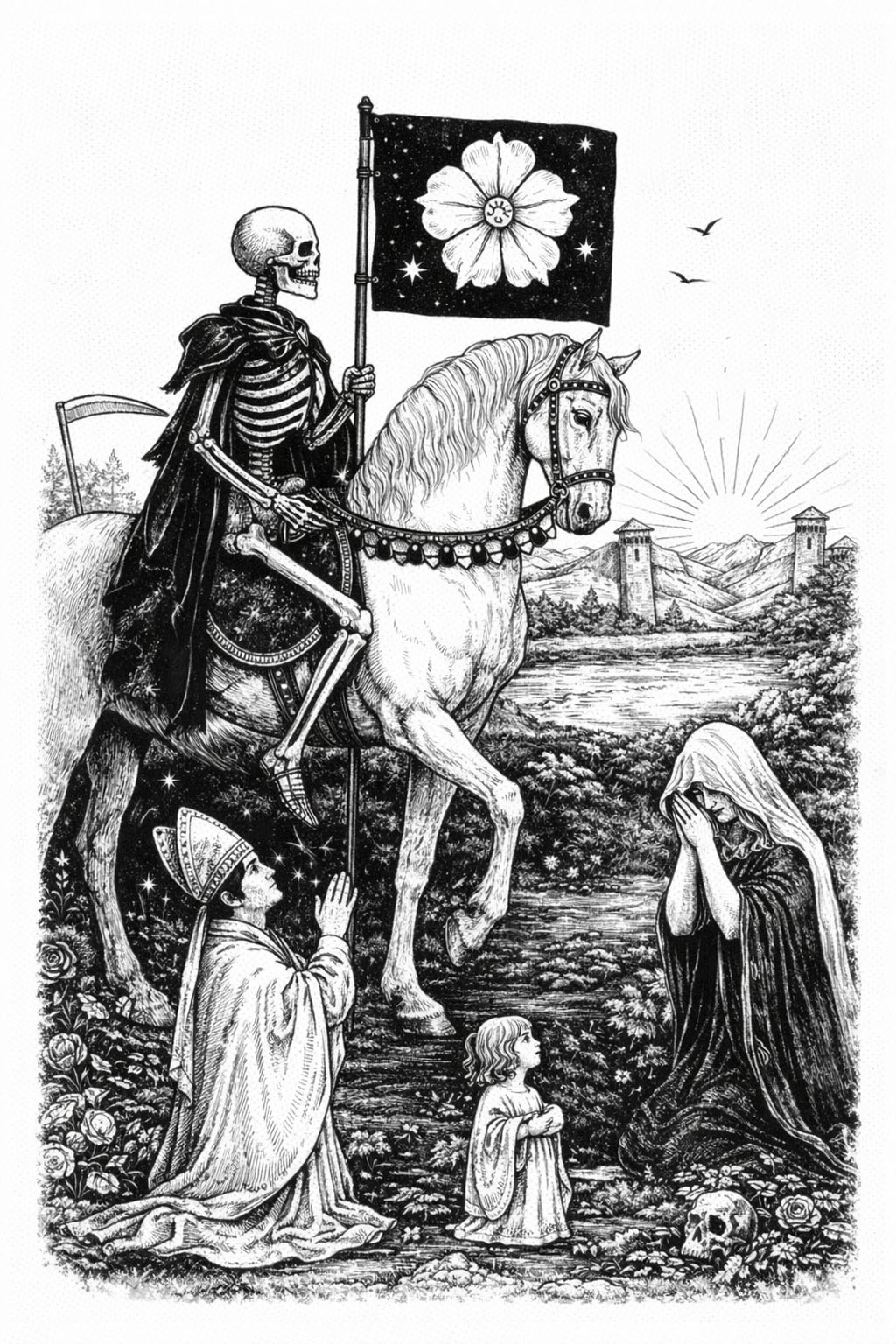
In a love reading, the Death card is not a literal sign of physical death but a symbolic indicator of endings and structural transformation within relationships and personal feelings. It often points to the need to release outdated patterns, roles, or expectations that limit intimacy. This card highlights processes of closure and clearing: endings that create space for something different to emerge. That change can be painful or unsettling because it involves letting go of familiar dynamics, but it is also the mechanism by which deeper authenticity and new forms of connection become possible.
Applied to an existing relationship, Death may signal a period where habitual ways of relating must be re-evaluated—commitments, boundaries, or life circumstances may shift, requiring honest conversation and renegotiation. It can surface grief for what is lost, and it emphasizes the importance of attending to that grief rather than denying it. For someone who is single, the card can indicate an internal transformation: shedding old patterns in dating, expectations, or self-concept that have prevented healthier attachments. In both scenarios the emphasis is on transition rather than fate; how people respond to the ending determines what is built next.
As an analytical guide, the Death card encourages a thoughtful, deliberate approach: observe what no longer serves the relationship, allow space for processing emotions, and consider practical steps to redefine boundaries or roles. It also suggests that renewal is possible but requires honest appraisal and sometimes difficult choices. The card educates about the cyclical nature of relationships—closure often precedes new growth—and invites a focus on adaptation and authentic change rather than on avoidance.
meaning.job
In a career context, the Death card is best read as a symbol of endings, transformation, and structural change rather than a literal event. It commonly indicates that a current role, project, system, or way of working has reached its limit and that a process of dismantling or closure is underway or necessary. This can show up as completed cycles, redundancies in job functions, organizational restructuring, or the need to shed habits, responsibilities, or identities that no longer serve professional development.
Analytically, the card highlights the principle that something must be released to make room for something different. That release can be experienced with mixed emotions: relief and clarity for some, uncertainty and loss for others. In practical terms, the Death archetype invites assessment of what is obsolete in daily workflows, skills, or career trajectory; it points to opportunities for reinvention, reskilling, and reorientation of goals. It also underscores the importance of transition management—documenting knowledge, communicating changes, planning next steps, and building networks to support movement into new roles or industries.
Interpreting this card in a reading benefits from context: surrounding symbols, timing, and the querent’s circumstances determine whether the emphasis is on voluntary transformation (a conscious career pivot) or external forces (restructuring, layoff). The educational takeaway is to view endings as part of a developmental cycle in professional life—an occasion for deliberate review, strategic preparation, and rebuilding rather than an endpoint in itself.
meaning.finance
In a financial context, the Death card represents endings that clear the way for new structures rather than literal catastrophe. It points to processes of transformation: a revenue stream, investment, business line, contract, or asset may reach a natural conclusion or be deliberately wound down so resources can be redeployed. This card highlights structural change—liquidation, restructuring, consolidation, the sale of underperforming holdings, or the termination of financial habits that are no longer sustainable.
Interpreting the card analytically, it emphasizes the mechanics and consequences of those endings: timing, tax and legal implications, cashflow effects, and the need to reallocate capital deliberately. The emotional dimension—loss, relief, uncertainty—can affect decision-making and should be acknowledged, but the primary focus is on competent management of transition. When transformation is underway, maintaining clear records, assessing liabilities, modeling scenarios for post‑change cash position, and consulting appropriate professionals (accountants, legal counsel, financial planners) are practical responses.
Viewed educationally, the Death card is a prompt to review portfolio composition, expense structures, and contractual commitments with an eye toward efficiency and future resilience. It invites analysis of whether holding on to an asset or business line is driven by inertia or justified by objective criteria, and encourages planning for reinvestment or rebuilding once the closure or restructuring is complete. The card signals that endings, handled thoughtfully, can create capacity for more suitable opportunities rather than simply representing loss.
meaning.family
In a family context, the Death card functions as a symbol of endings and the structural shifts that follow them rather than a literal forecast of physical death. It points to a period in which established patterns, roles or living arrangements are being stripped away to make room for something different. This can show up as a breakup or divorce, a move, children leaving home, a change in caregiving responsibilities, or the collapse of longstanding but stagnant dynamics. The core idea is transformation: what is ending creates the conditions for a new family configuration or new ways of relating.
The card also highlights the psychological and emotional processes that accompany such changes. Members may experience grief, relief, disorientation or resistance as familiar expectations are lost. Repeating conflicts, avoidance of difficult conversations, or a sense of being “stuck” are often associated factors; the Death card draws attention to the necessity of confronting those realities rather than prolonging stagnation. It is not an instruction that something must end, but a marker that endings are present or becoming likely and that they carry consequences for how the family reorganizes itself.
Practically, this card suggests focusing on processes that ease transition: clear communication about new roles and boundaries, attention to the emotional work of loss and letting go, and sensible planning for logistical or financial changes. Support—whether social, legal, or therapeutic—can be valuable while adjustments are made. Rituals, symbolic good-byes, or deliberate acts of closure often help family members recognize the end of one phase and the start of another.
Seen educationally, Death in a family reading emphasizes impermanence and the opportunities in necessary endings. It encourages an examination of what aspects of family life are no longer serving the group and invites deliberate choices about rebuilding. The emphasis is on transformation through acknowledgment and process rather than on fixed outcomes.
meaning.mind
When the Death card appears in the context of psychological state, it speaks to processes of ending, transformation, and psychological reorganization rather than literal mortality. It indicates that an aspect of the psyche—an identity, belief system, habit pattern, relationship dynamic, or coping strategy—is reaching its limit and is in the process of being dismantled or released. This can feel destabilizing: shock, grief, numbness, or anxiety are common reactions as familiar structures fall away.
Psychologically, the card highlights both the termination and the necessary clearing that precedes renewal. It often marks a phase of intense inner work where one must confront losses, let go of outdated self-concepts, and allow painful feelings to be experienced rather than bypassed. Resistance may show up as denial, clinging, or attempts to maintain control; conversely, acceptance opens space for new perspectives, clearer priorities, and more authentic ways of relating to oneself and others.
Practical engagement with this energy typically involves gradual integration—acknowledging what is ending, tending to grief, examining the meanings attached to former patterns, and experimenting with new behaviors and narratives. Therapeutic support, reflective practices like journaling or somatic work, and compassionate pacing of change can help contain the upheaval and foster the emergence of a reorganized, more adaptive sense of self. Viewed clinically, the Death card flags a transitional phase that, if attended to, can lead to meaningful psychological growth rather than simply loss.
meaning.soul
In a psychological context, the Death card points to processes of ending and transition within the inner life rather than literal mortality. It often indicates that parts of the self—roles, beliefs, relationships, habits, or identities—are in the process of being relinquished or restructured. This inner work may be experienced as necessary clearing: the dismantling of patterns that no longer fit and the emergence of a different configuration of priorities or self-understanding.
Emotionally, the state associated with this card can be ambivalent. There can be grief, relief, emptiness, or disorientation as one navigates a loss of familiar structures. Fear and resistance often accompany the process; holding on can produce stagnation, while conscious acceptance tends to open space for renewal. The liminal quality of this state means one may feel neither what was nor what will be, with a heightened sensitivity to endings and beginnings.
From an educational perspective, recognizing this state is useful because it frames distress or upheaval as part of a transformative process rather than as purposeless breakdown. Approaches that attend to mourning, clarify values, and support restructuring—such as reflective practice, boundary-setting, psychotherapy, and symbolic rituals of closure—are commonly discussed as ways to work with such transitions. The emphasis is on integration: allowing what must end to end so that new patterns can form with greater coherence and authenticity.