Context
meaning.love
The Four of Swords in a love context highlights a period of pause, recuperation, and mental regrouping. It points to a need for rest from emotional intensity—whether that has come from recent conflict, ongoing stress, or the cumulative fatigue of relationship maintenance. This card frames solitude not as abandonment but as a deliberate interval for recovery and clearer thinking, where distance allows thoughts and feelings to settle so that subsequent choices are less reactive.
For people in relationships, the card suggests a temporary withdrawal or a mutual cooling-off rather than decisive closure. It can imply a negotiated break, reduced contact, or simply more personal space so each partner can tend to their own emotional resources and reassess priorities. This interval can provide an opportunity to identify patterns that led to exhaustion, to practice calmer communication, and to regroup around shared goals with renewed clarity—provided the pause is acknowledged and bounded rather than used to avoid necessary conversation.
For those who are single, the Four of Swords points to a phase of introspection and healing before re-entering the dating scene. It favors recovery from a recent breakup or from repeated unsatisfying interactions, offering time to reflect on needs, set healthier boundaries, and rebuild emotional reserves. This is a time for self-care and learning, not for forcing immediate action.
Possible pitfalls include prolonged avoidance, emotional numbing, or mistaking withdrawal for resolution. The educational use of this card is to recognize the value of intentional rest while also planning how and when to reengage. Practical steps consistent with this energy include creating quiet routines, seeking supportive counsel if needed, clarifying with a partner about the purpose and duration of space, and using the pause to translate insights into clear, compassionate communication when appropriate.
meaning.job
The Four of Swords in a career context emphasizes a period of pause, withdrawal, and mental recuperation rather than immediate action. As a suit of Swords relates to thought, communication, and decision-making, the image of resting or convalescing points to the need for deliberate stepping back: a break from high-intensity activity to recover clarity and stamina. This card suggests that when work feels overwhelming, the productive response is not necessarily more effort but strategic rest, reflection, and reorganization.
Practically, the card can indicate taking a sabbatical, scheduling recovery time after a busy project, or creating clearer boundaries to prevent burnout. It can also denote a lull in activity that offers an opportunity to reassess priorities, review processes, and plan next steps with a calmer perspective. The Four of Swords encourages removing oneself temporarily from contentious dynamics or pressured decision-making to allow facts and options to settle.
At the same time, this card carries a caution against excessive avoidance or disengagement. A prolonged retreat without plans for reintegration can become stagnation or missed opportunities. The most constructive approach associated with this card is an intentional pause: rest and reflect, document decisions and handovers, seek support where needed, and use the breathing space to develop a clear, sustainable strategy for moving forward when ready.
meaning.finance
Four of Swords in a financial context represents a period of pause, consolidation and recuperation rather than active growth or new ventures. It is associated with reducing activity, stabilizing existing positions and preserving capital; this can show up as deliberate cutbacks, a temporary halt to investing or major purchases, or a focus on rebuilding savings after a disruption. The suit of Swords emphasizes thought and strategy, so the card points toward using this quieter interval for assessment: reviewing budgets, clarifying cash flow, checking risk exposure and documenting obligations so future decisions rest on accurate information rather than emotion.
This card also describes enforced pauses: delays in payments, freezes on accounts, or periods of lower income that require restraint. In that situation the appropriate response is protective and methodical rather than reactive—prioritize liquidity, delay nonessential spending, consider restructuring debt or negotiating terms, and avoid high-risk moves designed to “catch up.” At the same time, Four of Swords implies temporariness; it is a strategic rest, not necessarily a permanent dead end. Treat the time as an opportunity to plan contingencies, set clear criteria for when to re-engage with investments or spending, and consult impartial advice if complexities or legal/contractual issues are involved.
meaning.family
Sword Four in the family context points to a phase where pause, recuperation and mental regrouping become central themes. Rather than signaling decisive action or new initiatives, this card highlights the need for space and quiet after a period of tension, illness or emotional strain. Family members may be withdrawing to process events, catch up on rest, or protect their own energy; this can be a deliberate, healthy boundary or a defensive retreat that postpones unresolved issues.
In practical terms, the card draws attention to the value of creating calm and predictable conditions at home: allowing time for recovery, limiting stimulation, and supporting restorative routines. It also emphasizes thoughtful reflection before making important decisions affecting the household, since clarity often improves after a deliberate pause. At the same time, the Four of Swords warns against indefinite avoidance. If rest becomes isolation, unresolved conflicts or unmet needs can accumulate. Effective use of this pause involves compassionate care, gentle communication about personal limits, and planning for a gradual re-engagement when people feel ready.
Applied analytically, the card encourages assessing whether the family’s current withdrawal is restorative or obstructive, identifying what support is needed for convalescence (emotional, practical or medical), and establishing boundaries that protect recovery while keeping channels open for necessary dialogue.
meaning.mind
The Four of Swords, in the context of psychological state, points to a period of withdrawal, rest and mental consolidation rather than active decision-making. It indicates that cognitive and emotional resources are depleted or dispersed and that the psyche is inclined toward stepping back, creating distance from stressors and taking time for recuperation. This can show up as a deliberate pause, enforced rest after crisis or burnout, or a state of quiet introspection where conscious processing and integration of recent events occur.
Psychologically, the card can manifest as fatigue, numbness, reduced reactivity, or a preference for solitude. It may reflect a protective retreat—temporary disengagement to recover strength and restore clarity. At the same time, similar behaviors can also mask avoidance: extended isolation, procrastination on necessary matters, or dissociation that delays dealing with underlying issues. Distinguishing restorative rest from avoidance requires attention to duration, intention and whether reflection leads to renewed capacity or persistent stagnation.
From an educational standpoint, moments suggested by this card are useful for consolidation: structured rest, sleep, reflective practices, boundary-setting, and therapeutic work that allows the mind to assimilate experience and reorganize priorities. It emphasizes the importance of allowing cognitive and emotional recovery before returning to high-demand activity, while also encouraging awareness so the pause does not calcify into long-term withdrawal.
meaning.soul
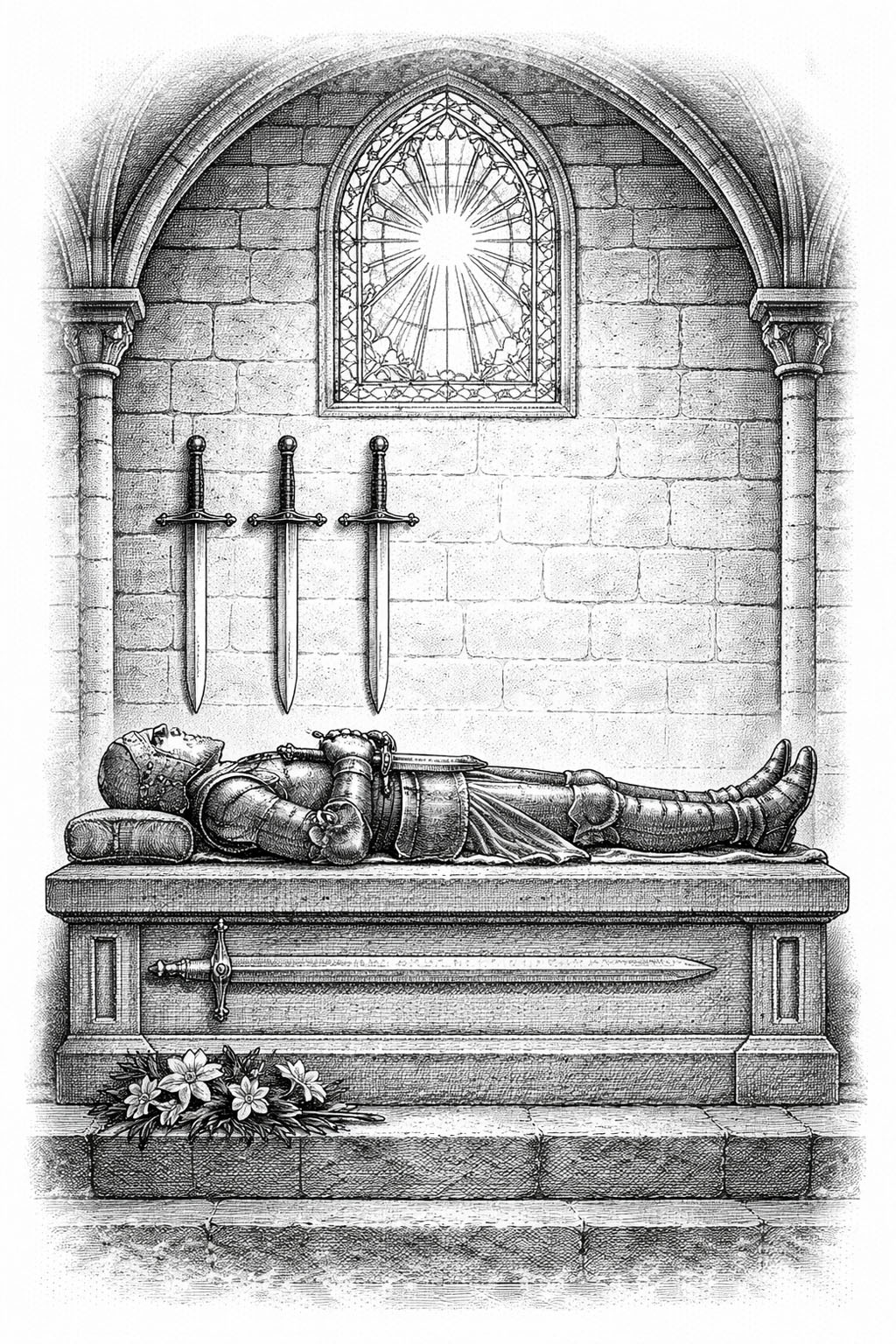
The Four of Swords (Sword Four) describes a state of enforced or chosen withdrawal from external pressures and mental activity. Symbolically it shows a figure at rest beneath or within a protective enclosure, implying a pause in the day-to-day struggle of ideas and decisions so that the nervous system and thought processes can quiet. Psychologically, this card points to recuperation, deliberate reflection, and the need to create distance from conflict or information overload in order to integrate recent experiences. It can also indicate numbness, dissociation, or procrastination when the pause becomes a way of avoiding necessary action; in that light the card draws attention to whether the retreat is restorative or defensive. Considered educationally, the image encourages practices that promote mental recovery—structured rest, clear boundaries around stimulation, focused reflection or journaling, and small steps to re-engage when energy and clarity return—while remaining mindful of signs that isolation is serving to postpone rather than resolve underlying issues. As an emotional snapshot, the Four of Swords emphasizes patience with the process of healing, the importance of creating a safe space for thought, and the eventual need to translate insight gained during rest into manageable plans for recovery and re-entry.